


/file/publisher-c1a3f893382d2b2f8a9aa22a654d9c97/2024/11/543fbd7ee0c031707a76510097169ff4.jpg)

Govt to revise SST rates, broaden scope from July 1
The government will implement a revision of Sales Tax rates and expand the scope of the Service Tax starting July 1, in a move aimed at strengthening Malaysia’s fiscal position through higher revenue and a broader tax base.
Finance Minister II Amir Hamzah Azizan announced today that a zero percent sales tax on necessities will be maintained, while non-essential goods will see a tax of between five and 10 percent.
He said the measures are designed to...
Summary
Govt is revising Sales Tax rates and expanding the Service Tax scope starting July 1, 2025, to increase revenue.
Essential goods and services remain zero-rated, while non-essential and premium items will have taxes of 5-10 percent.
Service Tax will expand to include rental, construction, financial, healthcare, education, and beauty services.
The government will implement a revision of Sales Tax rates and expand the scope of the Service Tax starting July 1, in a move aimed at strengthening Malaysia’s fiscal position through higher revenue and a broader tax base.
Finance Minister II Amir Hamzah Azizan announced today that a zero percent sales tax on necessities will be maintained, while non-essential goods will see a tax of between five and 10 percent.
He said the measures are designed to improve the quality of the country’s social safety net without burdening most Malaysians.
“The government is committed to continuing the reforms under the Madani Economy framework.
“To ensure that the majority of people are not affected by the Sales and Service Tax (SST) revision, the Madani government is taking a targeted approach to ensure that basic goods and services are not taxed.
“In addition, various facilities are also being provided to mitigate the impact on micro, small, and medium enterprises (MSMEs),” he said in a statement.

Essential items that will remain zero-rated include chicken, beef, lamb, fish, prawns, squid, vegetables, local fruits, rice, barley, oats, wheat, flour, canned sardines, sugar, salt, white bread, pasta, vermicelli, noodles, instant noodles, milk, cooking oil, medicines, medical devices, books, journals, newspapers and pet food.
The same rate will also apply to basic construction materials such as cement, stone and sand, as well as key agricultural inputs such as fertilisers, pesticides and machinery for farming and livestock.
For non-essential items, a five percent tax will be levied on products such as king crab, salmon, cod, truffle mushrooms, imported fruits, essential oils, silk fabrics and industrial machinery.
Premium items such as racing bicycles and antique hand-painted artwork will attract a 10 percent sales tax.
Service tax scope expanded
Amir said the service tax rate, ranging between six and eight percent, will also be extended to cover rental, construction, financial services, private healthcare, education and beauty services.
The full list of the expanded service tax and exemptions is as follows:
1. Rental or leasing services
An eight percent service tax will apply to providers whose rental or leasing income exceeds RM500,000.
Exemptions include:
Residential building rentals, reading materials, financial leases and tangible assets outside Malaysia;
MSME lessees with annual sales below RM500,000;
Business-to-business (B2B) transactions and group relief to avoid double taxation;
Non-reviewable contracts will get a 12-month exemption from the effective date.
2. Construction services
A six percent tax will apply to service providers exceeding RM1.5 million in value.
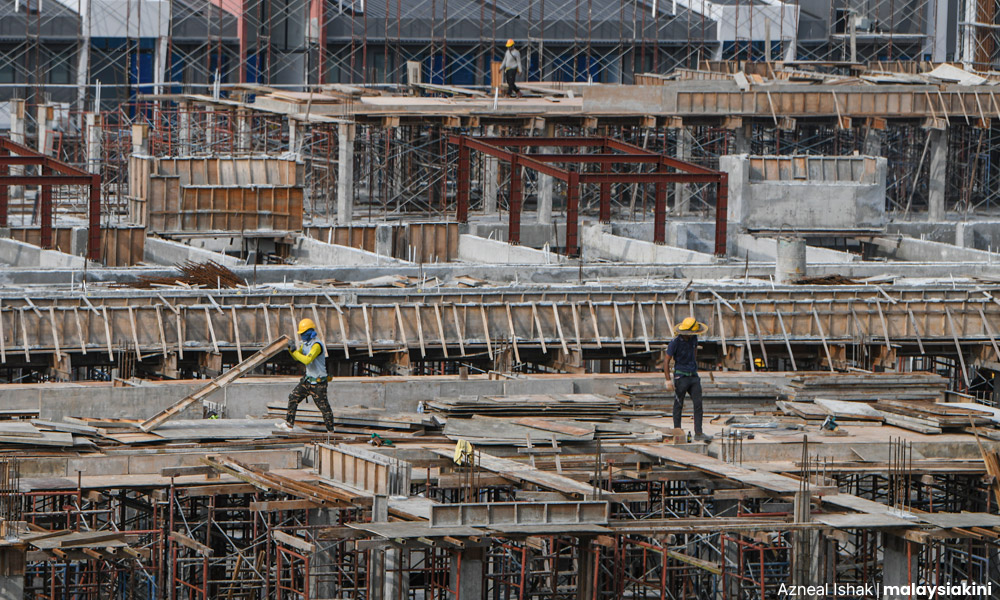
Special treatment includes:
The higher RM1.5 million threshold to ease compliance for small contractors;
Exemption for residential buildings and housing-related public facilities;
B2B exemption to avoid double taxation;
12-month exemption for non-reviewable contracts.
3. Financial services
An eight percent service tax will apply to fee- or commission-based services.
Exemptions include:
Basic banking and syariah-compliant financing (interest/profit-based payments);
Foreign exchange and capital market gains;
Outward remittance transactions from Malaysia;
Financial facilities linked to exported goods;
Inward remittance charges to foreign money transfer agents;
Life, medical and family takaful insurance broking/underwriting for individuals;
B2B exemption and services provided to Bursa Malaysia and Labuan.
4. Private healthcare services
A six percent tax will apply to services provided to non-citizens by providers exceeding RM1.5 million.
Special treatment includes:
Exemption for Malaysians using public and private healthcare, as well as traditional and complementary medicine;
Exemption for allied health services (physiotherapy, audiology, speech therapy) for Malaysian citizens;
A lower six percent tax for non-citizens;
The RM1.5 million threshold to ease compliance for small healthcare providers, such as clinics.
5. Education services
A six percent tax will apply to private preschool, primary and secondary education where annual tuition exceeds RM60,000 per student.

“The government believes that imposing a service tax on high-value private education is more targeted towards higher-income groups, with the number of affected schools being minimal.
“In addition, the government will consider not imposing CP (Service Tax) on Malaysians with disabilities,” said Amir.
Higher education tuition fees for non-citizen students will also be taxed. However, Malaysians will not be taxed for higher education.
6. Beauty services
An eight percent service tax will apply to taxable beauty services exceeding RM500,000 within 12 months. These include facial treatments and hair styling.
Impact and compliance’
Amir said the additional revenue from the revised SST would complement the government’s efforts to boost the economy and further improve public services.
“For the expansion of the service tax scope, notifications and relevant legal gazetting will provide industry players with sufficient time to assess their business operations,” he added.
/file/publisher-c1a3f893382d2b2f8a9aa22a654d9c97/2024/01/13d7e9482777e6d341dd3e4e207a06e9.jpg)
/file/publisher-c1a3f893382d2b2f8a9aa22a654d9c97/2025/04/6cbef81d874ee9a92c6466234b0d090d.jpg)
/file/publisher-c1a3f893382d2b2f8a9aa22a654d9c97/2024/06/792f3476f3d3ec2945fa7cc037517b27.jpg)
/file/publisher-c1a3f893382d2b2f8a9aa22a654d9c97/2024/10/18096797c499de75201e3a79309e665c.jpg)


Are you sure you want to delete this comment?
This action cannot be undone.